On the afternoon of September 12, Xi’an University of Architecture and Technology (XAUAT) hosted the Global Presidents’ Forum on Architecture and Technology for Sustainable Human Development. Forty representatives from universities and institutions across 16 countries and regions were invited to attend the event.
Chen Rong, Vice President of Xi’an University of Architecture and Technology, delivered a keynote speech titled “From Chang’an to the World: A 130-Year-Old University’s Responsibility and Perspectives.” He pointed out that the value of a university lies not only in the number of talents it cultivates and the research outputs it produces, but more importantly in its ability to transform knowledge into public welfare, elevate local experience into human wisdom, and distill construction capabilities of a specific time and place into civilization-building capacity for the future. Faced with the overlapping challenges of our time—global climate change, resource and environmental constraints, the need to improve urbanization quality, heritage conservation and transmission, and digital transformation—architecture and technology are no longer confined to the scope of a single industry, but have become a fundamental proposition for sustainable human development. He stated that Xi’an University of Architecture and Technology is ready to work with partners from all countries to deepen joint research in areas including green building standards, low-carbon construction technologies, smart city governance, and cultural heritage protection, and to jointly build an open and inclusive platform for international collaborative innovation. XAUAT will give full play to the mechanism of the “Silk Road International Alliance of Architectural and Technological Universities” by sharing course resources, exchanging visiting scholars, and jointly training graduate students, so that academic wisdom may cross national borders, innovative outcomes may benefit the world, and the vision of “building a better home for humanity together” may be turned into reality.
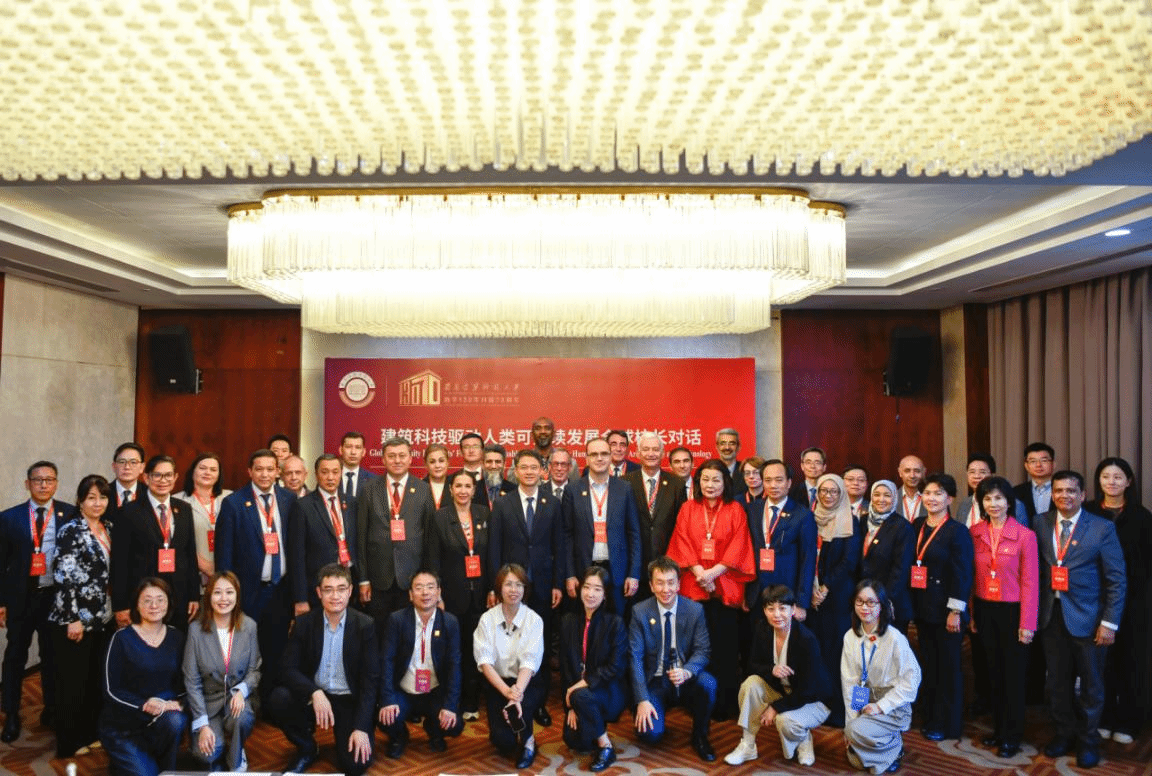
Eighteen high-level representatives from universities and institutions took the floor one after another, including the Permanent Delegation of Tajikistan to UNESCO, Australia Institute for Future Research, National University of Sciences and Technology (Pakistan), An-Najah National University (Palestine), Moscow State University of Civil Engineering (Russia), Belgorod State Technological University named after V.G. Shukhov (Russia), École Supérieure Libre d’Art de Paris (France), Hanyang University (Republic of Korea), Research University of Mongolia, Osh Technological University (Kyrgyzstan), Universiti Teknologi PETRONAS (Malaysia), University of Moratuwa (Sri Lanka), Chulalongkorn University (Thailand), Tashkent University of Architecture and Civil Engineering (Uzbekistan), Termez State University of Engineering and Agrotechnologies (Uzbekistan), Universitat Politècnica de València (Spain), Hanoi University of Civil Engineering (Vietnam), and University of Macau. They shared insights, exchanged experiences, and proposed solutions on topics including how higher education can advance architectural science and technology innovation and serve global sustainable development.
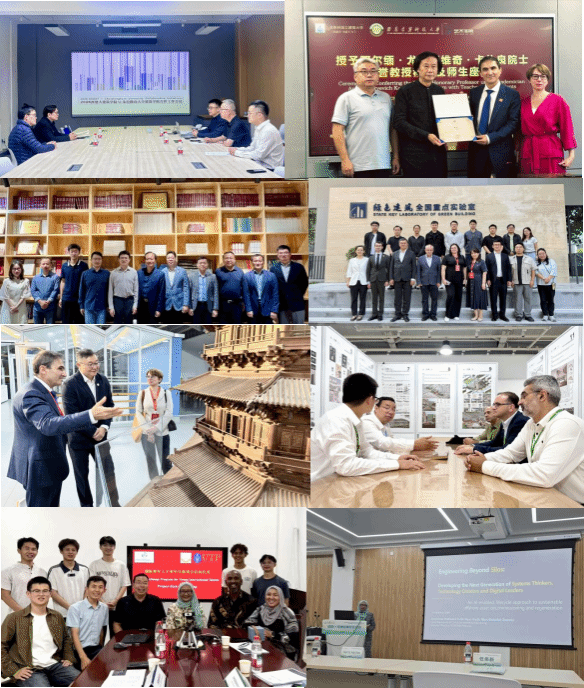
Participating representatives also engaged in more than 10 exchange sessions with leading teams from the State Key Laboratory of Green Building, XAUAT, Institute for Interdisciplinary Innovation, School of Architecture, School of Civil Engineering, School of Art, and the School of Urban Development and Modern Transportation. Multiplinnovation in architectural science and technology and contribute to consensuses were reached on scientific research cooperation, academic exchange, and joint platform development.